The plant · Aspalathus linearis

It grows here and nowhere else

Rooibos is farmed commercially in one region on earth: the Cederberg and the Suid–Bokkeveld, a few hours north of Cape Town. This is a guide to that place — the farms you can visit, the towns you sleep in, and how the tea in your cup gets there.

At a glance
Species
Aspalathus linearis
Where
Cederberg & Suid–BokkeveldWestern & Northern Cape, South Africa
Protected origin
EU PDOgranted 2021
Harvest
December to Aprilannually, for about five years
Exports, 2025
10 930 tfirst year above 10 000 t
2021 Protected origin, granted by the EU Regulation (EU) 2021/865
10 930t Exported in 2025 — first year above 10 000 t SA industry reporting, Feb 2026
50+ Export markets SA industry reporting, Feb 2026
33% Of those exports went to Japan alone SA industry reporting, Feb 2026
December – April

Harvest

The fields are cut and the tea courts are working. If you want to see rooibos being made, this is the window.

May – August

The wet season

A winter-rainfall country: cold, wet, and almost all of the year’s 300–350 mm falls now.

September – November

Flowers

Spring on the escarpment, and the season Nieuwoudtville is known for. The plant itself flowers yellow now too.

Harvest window and rainfall: SANBI, PlantZAfrica. This is a calendar, not a live report — we are telling you what the time of year does here, not what the weather is doing today. More on when to come.
01 — Understand

Why only here

Rooibos grows commercially nowhere else on earth. Not as a slogan — as the legal position: in 2021 the European Union granted rooibos protected designation of origin status, the same instrument that reserves the name Champagne to Champagne. Tea grown outside this region cannot be sold into the EU as rooibos.

Most of South Africa’s crop comes from the Cederberg, and Clanwilliam is generally regarded as the hub of it. The plant itself is not what people expect: the living bush is grey–green and needled, nothing like the red in the cup.

A cultivated rooibos bush, grey-green and needled, with small yellow flowers
A rooibos bush, Aspalathus linearis. Grey–green and needled — nothing like the red in the cup. Representative image of the plant, not a Cederberg farm. Photo: Amada44, CC BY-SA 3.0.
What we have not confirmed yet

Where rooibos country actually ends. There is a legal boundary — the EU protected origin regulation names sixteen municipalities — but it is drawn around everywhere the plant may lawfully be grown, and it includes Cape Town and Stellenbosch. That is not the same as the region you would drive to. We are confirming the working growing footprint with producers before drawing anything on a map. The difference, explained.

Protected designation of origin: European Union, 2021. Regional share and harvest season: industry sources, being re–verified. Every claim on this site is recorded with its source in our facts file, and anything we cannot source stays off the page.
02 — Where it is

A few hours north of Cape Town

Rooibos country sits inland and north of the city, across the Cederberg range and up onto the Bokkeveld escarpment. It is farmland and mountain rather than coastline: sandstone, fynbos, wide light, cold nights.

Each town is a different kind of trip. Clanwilliam is the working centre of the tea. Citrusdal sits at the southern gate. Wupperthal is deep in the mountains and hard to reach. Nieuwoudtville is a flower destination first and a rooibos one second.

Which town suits which trip · Roads, distances and when to come

Towns in scope
  • Clanwilliam the hub
  • Citrusdal southern gate
  • Wupperthal mountain
  • Nieuwoudtville escarpment
  • Graafwater to be confirmed
The sketch below places these towns from their published coordinates. A pinned, interactive map waits on the growing boundary being settled — we do not plot a pin we cannot stand behind.

Rooibos country runs from Citrusdal in the south, through Clanwilliam and the Cederberg mountains, up to Nieuwoudtville on the Bokkeveld escarpment — roughly three hours north of Cape Town. The towns · Roads and distances

03 — Where to start

Three ways into this

People arrive here for genuinely different reasons, so the site is built in three layers rather than one.

I

You are planning a trip

How far it is, what road, when to come, and which town to base yourself in. The directory of farms that welcome visitors is still being researched — nobody gets listed here until we have confirmed the terms with them.

Getting here Where to sleep Farms — in research
II

You drink it and want to know where it comes from

What rooibos actually is, how it is grown and made, and what protected designation of origin means for what ends up in the packet.

III

You buy it, or want to

Who grows, who processes, who exports, and what the leaf is turned into once it leaves the region — tea, extract, cosmetics. The smallest audience here, and the one we are building for last.

Who makes rooibos The extract trade Certification — in development
04 — Worth knowing

Six things worth knowing

Every one of these is in our sources file with a citation. Where a figure is soft, it says so.

It is not a tea. Aspalathus linearis is a legume — closer to peas and beans than to the tea plant.

SANBI, PlantZAfrica
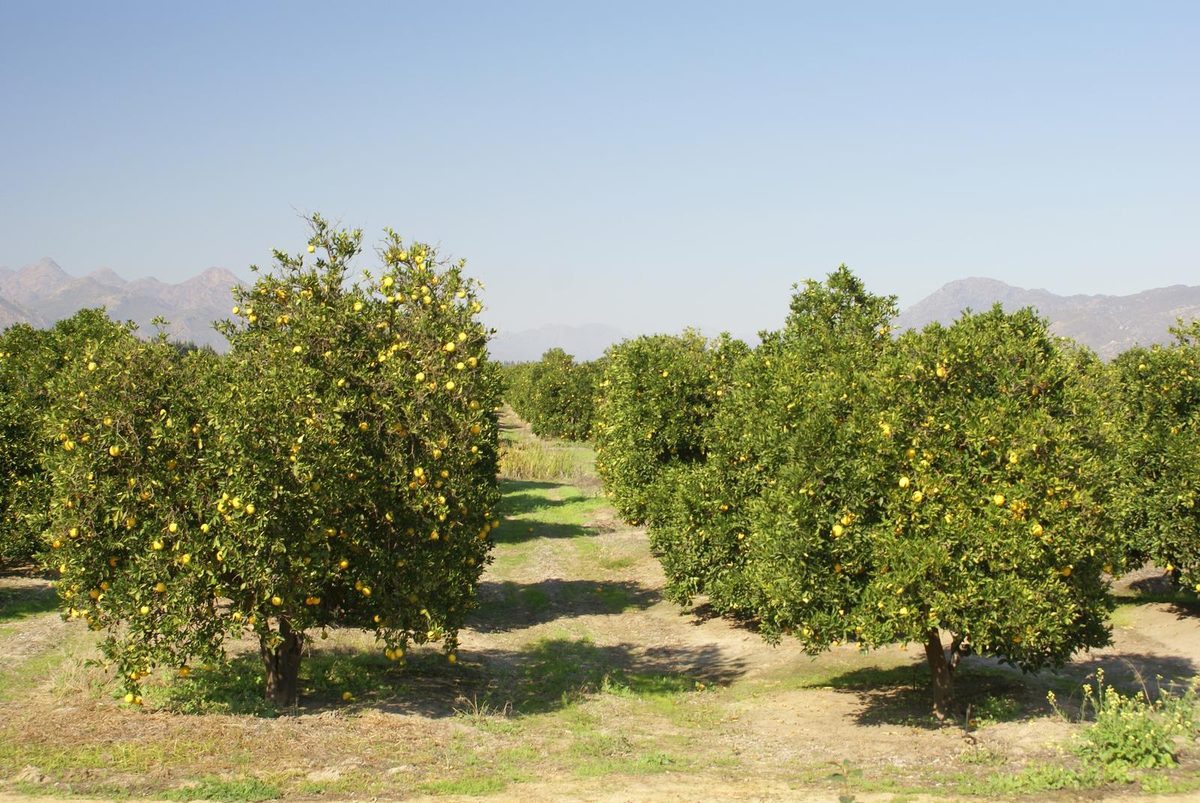
Citrus orchards in the Citrusdal valley with mountains behind
Citrusdal, at the southern gate of the region. Photo: Danie van der Merwe, CC BY 2.0

The living bush is grey–green. The red arrives only after the cut leaf is bruised and left to oxidise.

SANBI, PlantZAfrica

Protected since 2021 — by the same instrument that reserves the name Champagne to Champagne.

Commission Implementing Regulation (EU) 2021/865

Harvest runs December to April, and a field keeps giving for about five years before it is replaced.

SANBI, PlantZAfrica
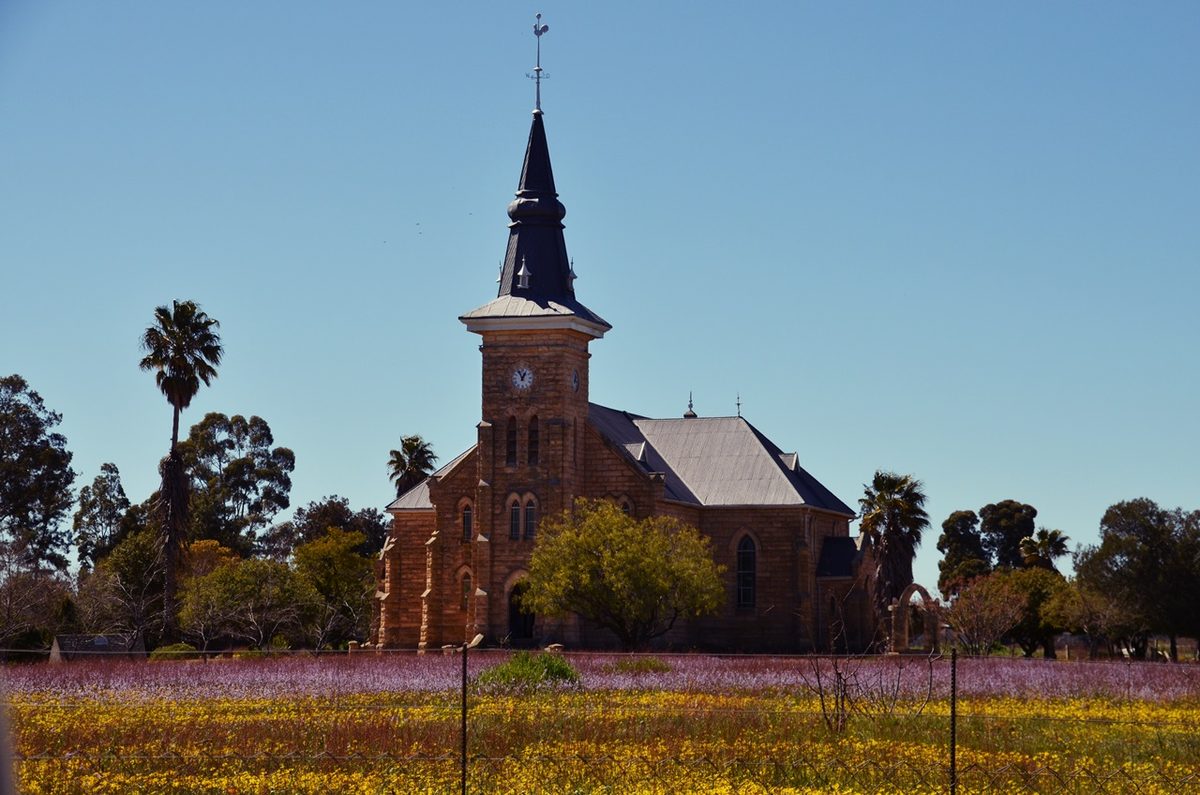
The Dutch Reformed church at Nieuwoudtville with spring flowers in front of it
Nieuwoudtville, on the Bokkeveld escarpment. Photo: Suzi-k, CC BY-SA 3.0

The traditional knowledge is Khoi and San. Since 2019 the industry has paid them a levy of 1.5% of the farm gate price.

Natural Justice; SA Rooibos Council

About 20 000 tons are produced a year, and South Africans drink roughly half of it themselves.

SA Rooibos Council — figure is approximate
Each claim above is recorded with its source in our facts file. How we source things.
05 — The industry

A small region with a long reach

The scale is worth knowing before you drive out here, because it explains why a quiet valley has export offices in it.

FigureValue
Exports, 202510 930 t first year above 10 000 t
Exports, 2015about 5 900 t
Established marketsGermany, Netherlands, UK, France
Exports, 2015 to 2025 tonnes per year
~5 900 t
2015
10 930 t
2025
Two points, both sourced: 2015 is “about 5 900 t” as published; 2025 is the first year above 10 000 t. We plot only what the industry reporting states — no interpolated line between them.
Export figures: South African rooibos industry reporting, February 2026, for the 2025 calendar year, rounded as published.
06 — News

Rooibos seeds are scheduled to go to the space station

In October 2026, rooibos seeds are scheduled to travel to the International Space Station, to test how microgravity and cosmic radiation affect germination and growth. Seeds that have been to orbit will be compared with control samples kept on the ground. The South African Rooibos Council, MaxIQ Space and the South African National Space Agency are involved, alongside seven Cederberg schools.

Rooibos is much more than a beverage; it is a destination brand because it can only be produced in one small part of the world.

Prof. Martinette Kruger, North–West University

What is actually happening, and what it means for the region

How we are treating this

We have no involvement in the mission and no access to it. We report it from published sources and date–stamp what we write, because launch dates move. A “Rooibos to Space” interpretation centre has been proposed for Clanwilliam — proposed, not built. You cannot visit it.

Reported August 2026 from published South African coverage. Details of the mission, including its date, may change.