Is rooibos a real tea?
No — not in the botanical sense. Rooibos is Aspalathus linearis, a member of the Fabaceae, the pea and bean family. The tea plant, Camellia sinensis, belongs to the Theaceae, the camellia family. The two are not related at all.
Read the restAbout 1 minute
What they share is a category in a supermarket and a way of being drunk. Both are dried leaves steeped in hot water. That is where the resemblance ends, and it is worth being precise about it, because the word “tea” does a lot of work in that sentence.
Strictly, “tea” means a drink made from Camellia sinensis — which is what green tea, black tea, oolong and white tea all are. Rooibos is an infusion, a herbal drink, made from a plant that is not Camellia sinensis at all. Calling it tea is a convenience, not a description.
- Rooibos
Aspalathus linearis — a legume, Fabaceae. Cape fynbos. Needle leaves. - Tea
Camellia sinensis — Theaceae. Broad glossy leaves. Not a relative. - Honeybush
Cyclopia — also a Cape legume, and a genuine cousin. A different plant and a different drink.
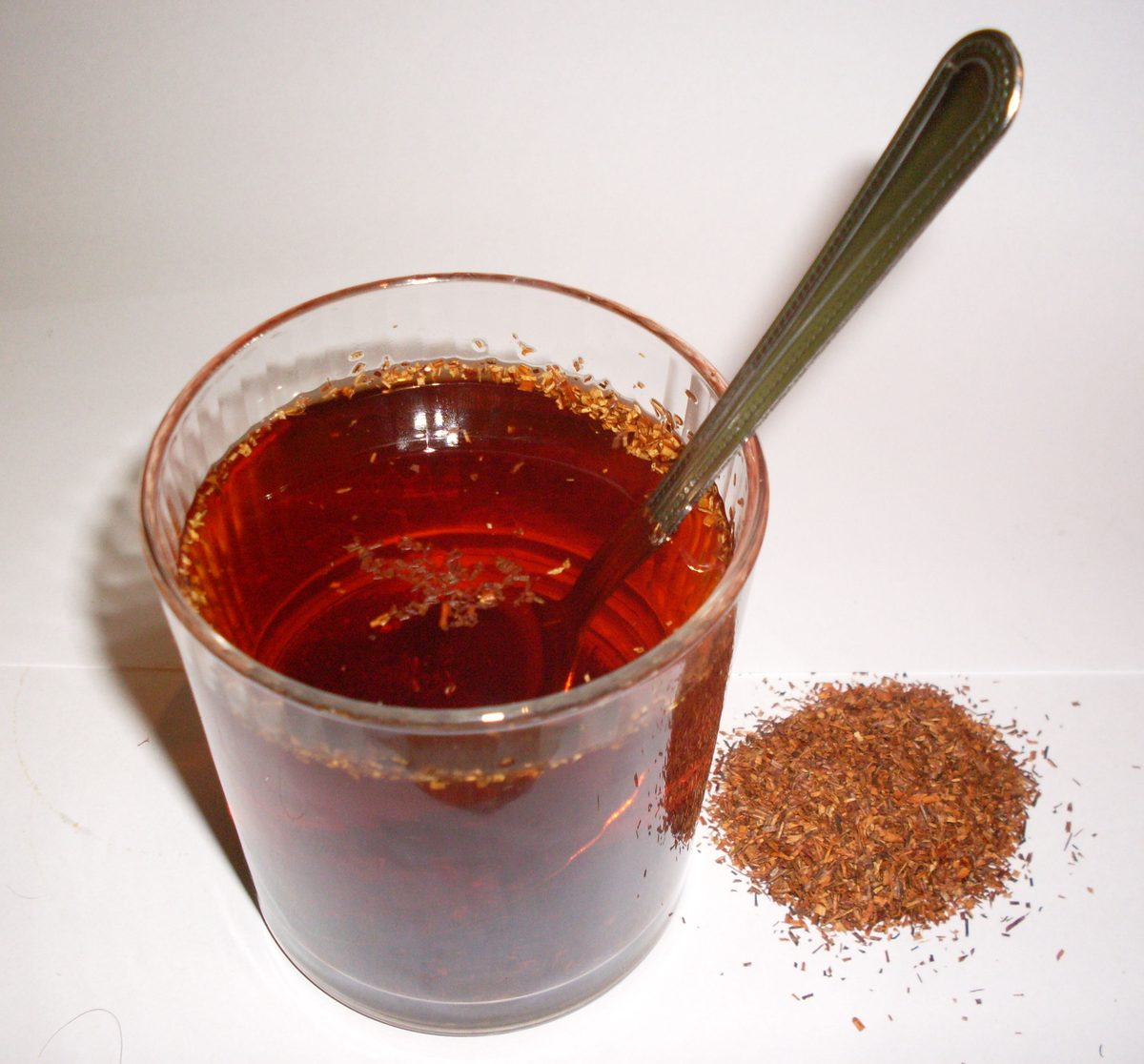
Rooibos vs green tea
Green tea is Camellia sinensis that has been heated quickly after picking to stop it oxidising, which is why it stays green. Rooibos is a different species entirely — a legume, not a camellia.
Read the restAbout 1 minute
The two are often compared because both are light, pale drinks, but the resemblance is in the cup, not the plant. Green tea comes from a broad-leaved shrub that grows in many tea regions around the world. Rooibos comes from a needle-leaved fynbos shrub that grows commercially in one region on earth.
There is a third thing people sometimes mean by “green rooibos” — rooibos that has not been through the oxidation step that turns the leaf red. That is a different question from rooibos-versus-green-tea, and we have not sourced it well enough to write about it yet. See the gaps below.
Rooibos vs black tea
Black tea is Camellia sinensis that has been fully oxidised, which is what gives it its dark colour and stronger flavour. Rooibos is often described as tasting like black tea without the bitterness, and the two are the most common substitution in the cup.
Read the restAbout 1 minute
But again, the plant is the difference. Black tea is a camellia, grown across many countries. Rooibos is a South African legume. The red colour of rooibos comes from an oxidation step in its own processing — the leaf is bruised and heaped until it turns reddish brown — which is a different process from black tea’s, even though both involve oxidation.
What they share is the colour and the role in a cup. What they do not share is the plant, the family, or the place it grows.
Rooibos vs herbal tea
This is the comparison that is actually fair, because “herbal tea” is not a plant — it is a category of drinks made from plants other than Camellia sinensis. Chamomile, peppermint, rooibos: all of these are infusions, not true teas.
Read the restAbout 1 minute
So rooibos is a herbal tea in the sense that it is not a true tea. But it is a particular kind of herbal tea, with two things most herbal teas do not have: a single named species (Aspalathus linearis) and a single place on earth where it is farmed commercially.
Most herbal teas are blends of whatever is available. Rooibos is a specific plant from a specific region, which is why it carries a protected designation of origin in the European Union — the same legal instrument that protects Champagne. What protected origin means.
The cousin: honeybush
If rooibos has a close relative in the cup, it is honeybush — Cyclopia. Honeybush is also a Cape legume, also made into a herbal infusion, and it is the plant people most often confuse with rooibos.
Read the restAbout 1 minute
The two are genuinely related, in a way rooibos and tea are not. Both belong to the pea family and both grow in the Cape fynbos. But they are different plants and different drinks: honeybush has its own species, its own flavour, and its own growing area.
It is worth knowing the difference, because the two are sometimes sold side by side and the names are easy to blur. Rooibos is Aspalathus linearis. Honeybush is Cyclopia. Different plants, same family, same kind of drink.
What we cannot tell you yet
Two things people ask about in this comparison, and where we stand on each.
| Question | Where it stands |
|---|---|
| Is rooibos caffeine-free? | Widely described as caffeine-free, but we have not sourced that properly yet, so we are not stating it as fact. It is on our research list.Research task: a primary source on rooibos and caffeine |
| What is green rooibos? | Widely described as the same leaf without the oxidation step, but we have not sourced that yet either. Same discipline applies.Research task: source before stating |
| What does rooibos taste like? | Not answered here. We are not going to describe a flavour by paraphrasing other people’s tasting notes. This gets written after we have sat down with producers.Planned: a page on taste and brewing |