Rooibos is a legume, not a tea, and it grows commercially in one region on earth.
- The plant Aspalathus linearis, a fynbos shrub of the pea family
- Where The Cederberg and Suid–Bokkeveld, a few hours north of Cape Town
- Why only here Acid, nutrient-poor sand and a winter-rainfall climate
- How it is made Cut, bruised, heaped to oxidise, then dried. That is what makes it red
- Caffeine None. Per SANBI
- Say it ROY-boss. Two syllables, Afrikaans for “red bush”
A legume, not a tea
Rooibos is Aspalathus linearis, and it belongs to the Fabaceae — peas, beans, lucerne, sweet thorn. It is not related to the tea plant, Camellia sinensis, at all. The two things share a category in a supermarket and almost nothing else.
Read the restAbout 1 minute
The genus it belongs to, Aspalathus, is the largest genus of the pea family that is found only in South Africa. There are hundreds of species of it scattered across the Cape, most of them small yellow-flowered shrubs that nobody has ever tried to drink.
The plant itself is an erect to spreading shrub, growing up to about two metres, with fine needle-like leaves between fifteen and sixty millimetres long and less than a millimetre thick. The young branches are often reddish. It flowers yellow, in spring and early summer.
Which means the living plant looks nothing like the thing in your cup. A rooibos field is grey–green and spiky, closer to a heath than to a hedge of tea. The red is not in the bush. It arrives later, and it is something people do to the plant, not something the plant does.
- Rooibos
Aspalathus linearis — a legume, Fabaceae. Cape fynbos. Needle leaves. - Tea
Camellia sinensis — Theaceae. Broad glossy leaves. Not a relative. - Honeybush
Cyclopia — also a Cape legume, and a genuine cousin. A different plant and a different drink.
Why the region is the region
The short answer people give is “the soil and the climate”, which is true and explains nothing. The longer answer is worth the paragraph.
Read the restAbout 1 minute
Rooibos is a fynbos plant, from the Cape Floristic Region, and fynbos is what grows on ground that has been leached of nutrients for a very long time. The soils are sandy, acid and poor. The genus Aspalathus is adapted to exactly that, and to fire. Being a legume, rooibos does not need a rich soil the way a leaf crop would — the conditions that make this country marginal for farming almost anything else are the conditions it is built for.
Then the water. This is a winter-rainfall country: cold wet winters, hot dry summers, and only about three hundred to three hundred and fifty millimetres of rain in a year. For comparison, that is drier than almost any commercial tea region on earth. The plant is native to a strip running from around Vanrhynsdorp in the north down to the Cape Peninsula and Betty’s Bay in the south — but the forms that are actually made into tea are found mainly in the Cederberg mountains.
The legal region and the real one are different
This is the part that trips people up, and almost nobody explains it. When the European Union registered rooibos as a protected origin product, it had to draw a boundary. That boundary names sixteen municipalities.
Bergrivier / Breede Valley / Cape Agulhas / Cederberg / City of Cape Town / Drakenstein / Langeberg / Matzikamma / Overstrand / Saldanha Bay / Stellenbosch / Swartland / Swellendam / Theewaterskloof / Witzenberg
Hantam
Marked in red are the municipalities we understand to carry the working growing area. That is our reading, not a published figure — we are checking it with producers. The unmarked ones are inside the legal boundary and outside the region in every other sense.
Read that list again and you will spot the problem. It includes the City of Cape Town, Stellenbosch and Overstrand. Nobody calls those rooibos country. The regulation is drawing a line around everywhere the plant may lawfully be grown or wild-harvested, which is a legal question, not a geographical one.
The region you would actually drive to is a much smaller set — the Cederberg and Matzikamma, up onto Hantam in the Northern Cape, with Witzenberg and Bergrivier at the southern end. When this site says rooibos country, that is roughly what it means. We say roughly deliberately: the working growing footprint is the one thing here we have not been able to source, and we would rather tell you that than draw a confident line in the wrong place.
The protected-origin area, the commercial growing footprint and the visitor region are three different shapes, and writing as though they are one is how tourism sites end up wrong. We are confirming the working growing footprint with producers before we draw anything on a map. Until then this page describes the boundary in words rather than pretending to a precision we do not have.
From bush to cup
A new planting takes twelve to eighteen months before it can be cut at all. After that it is harvested once a year, between December and April, and a field will keep giving for about five years before it is replaced.
Read the restAbout 1 minute
- CuttingOnly the young branches are taken. The rest of the bush is left to carry on.
- Chopping and bruisingThe cut material is chopped very fine and then bruised. The bruising is the step that matters — it is what lets the chemistry start.
- HeapingThe bruised tea is left in heaps to “sweat”. This is where it takes on its reddish brown colour. Everything people recognise about rooibos happens in this step.
- DryingIt is then spread out and dried in the sun.
- Sorting and gradingSorted, graded and packed. Grade is about leaf and stem, cut and consistency — not about quality in the way a wine score is.
You will see that heaping step called fermentation everywhere, including in some botanical sources. It is now generally understood to be oxidation rather than anything microbial. Rather than take a side in someone else’s argument, this page describes what actually happens to the leaf: cut, bruised, heaped, changes colour, dried.
What protected origin means
On 28 May 2021 the European Commission registered ‘Rooibos’ / ‘Red Bush’ as a protected designation of origin. It is the same instrument that reserves Champagne to Champagne and Parma ham to Parma, and it is the strongest of the EU’s origin protections: not merely made in a certain way, but grown in a certain place.
Read the restAbout 1 minute
In practice the registration reserves the name to the dried leaves and stems of one hundred per cent pure rooibos, derived from Aspalathus linearis, cultivated or wild-harvested inside that demarcated area. A shrub of the same species grown in Australia or China may be many things, but inside the European Union it may not be sold as rooibos.
It is widely reported to be the first African product to receive the status. That claim is not made in the regulation itself, so we attribute it rather than assert it.
Why it matters to a visitor rather than a lawyer: it is the reason this region has something the marketing cannot manufacture. The place is not a story attached to the product. The place is the product, as a matter of European law.
- Instrument
Commission Implementing Regulation (EU) 2021/865 - Date
28 May 2021 - Names protected
‘Rooibos’ and ‘Red Bush’ - Class
1.8 — other products of Annex I - Covers
Dried leaves and stems, 100% pure - Area
16 municipalities, Western and Northern Cape
Whose knowledge this was
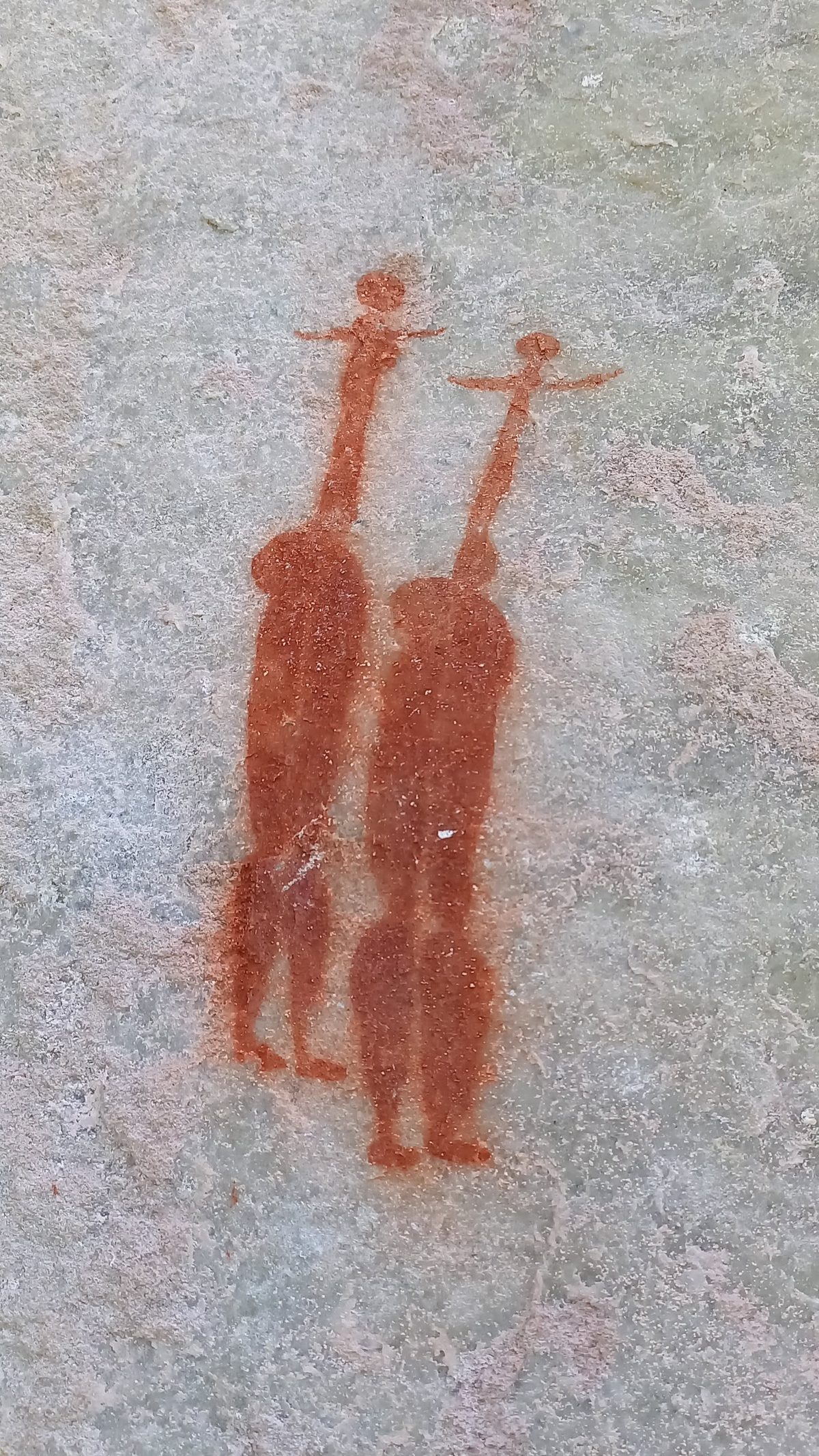
Rooibos was not discovered by the industry that sells it. People were making a drink from this plant long before anyone built a factory, and in 2014 a study commissioned by what was then the Department of Environmental Affairs concluded that the traditional knowledge associated with rooibos lies with the San and the Khoikhoi.
Read the restAbout 1 minute
That finding had a consequence, which is unusual enough to be worth stating plainly. South Africa is a party to the Nagoya Protocol, and under its own biodiversity legislation an industry trading in an indigenous resource has to share benefits with the holders of the knowledge. After roughly nine years of negotiation, an agreement was concluded on 25 May 2019 and launched that November, between the rooibos industry and the traditional knowledge holders represented by the National Khoi & San Council and the South African San Council.
The mechanism is a levy of 1.5% of the farm gate price — the price processors pay farmers — paid annually into community trusts. In August 2022 the first disbursement was made: R12.2 million, divided equally between the Khoi-Khoi Peoples Biodiversity and Rooibos Trust and the Andries Steenkamp ABS Trust.
The world’s first industry-wide benefit-sharing agreement.
Natural Justice, on the rooibos agreement
Every packet of rooibos sold since carries that levy inside its price. It is a small thing set against a long history, and it is also a real and unusual thing, and both of those can be true.
What is above is sourced to the agreement, to the department’s study and to the industry’s own reporting of the payment. That is enough to tell you what was agreed and by whom.
It is not enough to tell the deeper history — of the knowledge, of the people, of how they came to need an agreement in the first place. Doing that from industry summaries and NGO press releases would be careless, and it is not our story to compress. We will write it properly, with Khoi and San voices and primary sources, or we will not write it. For now this section stops where the sourcing stops.
How to say “rooibos”
Rooibos is pronounced ROY-boss — two syllables, the first rhyming with “boy”, the second with “boss”. It is an Afrikaans word: rooi (red) and bos (bush), so it literally means “red bush”, which is the other name you will see on packets.
Because it is a South African word, English speakers outside the country often guess at it — “roo-EE-bos”, “ROO-ee-boss”. The “rooi” is not two syllables. It is one, and it rhymes with “boy”.
The names it travels under
Rooibos is one of the few South African words the world took and kept. Dutch, French and Portuguese use it unchanged. English keeps it as well and adds a translation beside it — Red Bush, which the European Union registered alongside ‘Rooibos’ in 2021, so both names are reserved to the same demarcated area. Spanish and Italian have no settled common name at all and fall back on the botanical one.
Three of the biggest markets went their own way, and what they chose is worth knowing if you are reading about this plant in any language but English.
| Language | What it is called |
|---|---|
| German | Rotbusch or Roibusch for the plant, Rotbuschtee for the drink. A direct translation of the Afrikaans rather than a borrowing of it — German did to the word exactly what English did when it coined Red Bush.Also seen: Rooiboschtee, Rooibustee |
| Japanese | ルイボス (ruibosu) for the plant, ルイボスティー or ルイボス茶 for the tea. A phonetic borrowing, kept close to the Afrikaans sound.About a third of rooibos exports go to Japan |
| Chinese | 博士茶 — literally “doctor tea”. Two other names are in use: 路易波士茶, a phonetic rendering, and 南非國寶茶, which means “South African national treasure tea”. We have found no source saying which regions prefer which, so we do not say. |
The Chinese name is the one that repays a second look. South African national treasure tea is not a translation of anything in the Afrikaans; it is a description of where the plant comes from, arrived at independently on the other side of the world. The rest of this page is an argument that the place is the product. One of rooibos’s own names got there first.
What we cannot tell you yet
Most sites would not include this section. We would rather you knew where the edges of this page are.
| Question | Where it stands |
|---|---|
| What does it taste like? | Not answered here. We are not going to describe a flavour by paraphrasing other people’s tasting notes. This gets written after we have sat down with producers.Planned: a page on taste and brewing |
| What is green rooibos? | Answered. It is the same leaf without the heaping step, now sourced to the South African Rooibos Council. Green rooibos, and why it tastes different. |
| Who started farming it? | The names that circulate are a Clanwilliam trader from around 1904 and a local district surgeon who worked out how to germinate the seed in the 1930s. We can only find this in commercial and tourism sources, never a primary one, so we are not building a history on it.Research task: archive or journal source |
| Is it good for you? | We do not answer that, and we show you the research instead. Nobody here is medically qualified and this site makes no health claim of any kind. What it does do is report the literature — every study named, dated, sized and linked, null results included. What the research actually says. |
A legume, not a tea
Rooibos belongs to the pea and bean family, Fabaceae — closer to peas and beans than to the tea plant. It grows in soil too poor and too acid for almost anything else, which is most of the reason nobody has managed to farm it anywhere else.