What green rooibos is
Green rooibos is Aspalathus linearis — the same plant as the rooibos you already know — that has not been through the oxidation step that gives red rooibos its colour. The leaf is the same; the processing is different.
Read the restAbout 1 minute
To understand it, you need the one fact about how rooibos is made: the freshly cut leaf is bruised and heaped, and in that state it oxidises and turns its typical reddish-brown colour. That is the step that makes rooibos red. Green rooibos skips it.
The South African Rooibos Council — the industry body — puts it plainly: green rooibos is made from the same plant as traditional rooibos, and the only difference is in the processing. For green rooibos, the fermentation (oxidation) step is skipped and the green leaves and stems are dried directly, using different processes to prevent oxidation.
- Red rooibos
leaf bruised, heaped, oxidised → reddish-brown - Green rooibos
the same leaf, without that oxidation step - Same plant
Aspalathus linearis, Cape fynbos
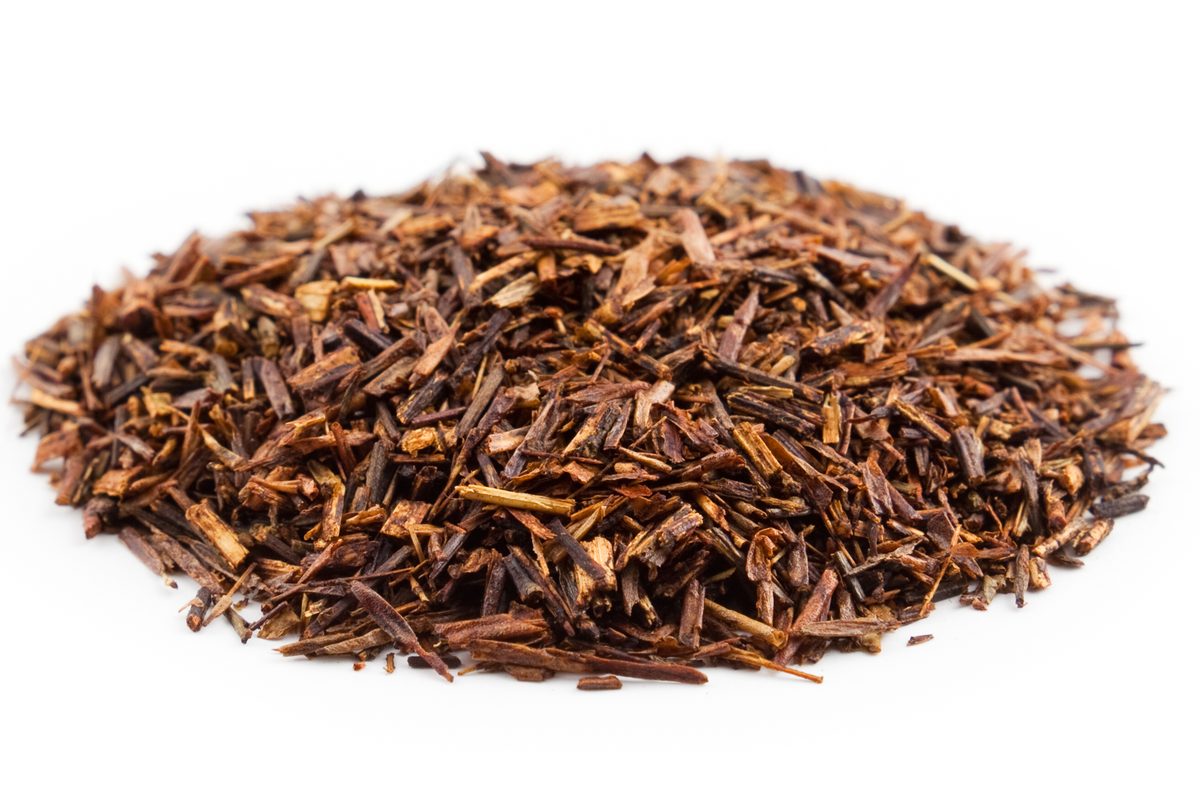
Green vs red rooibos
The difference between green and red rooibos is not the plant — it is the same plant. It is the processing. Red rooibos has been through the oxidation step that turns the leaf reddish-brown and deepens the flavour. Green rooibos has not.
Read the restAbout 1 minute
That single step is what separates the two, and it is the same logic that separates green tea from black tea — though the plants are entirely different. In both cases, oxidation is the variable that changes the colour and character of the dried leaf.
What does that mean in the cup? The South African Rooibos Council describes the green (unfermented) infusion as having a lighter tan-to-yellow colour and a very mild “green” taste reminiscent of green tea. Red rooibos, by contrast, is the familiar reddish-brown brew.
Green rooibos vs green tea
This is where the names get confusing, because “green” appears on both sides. Green tea is Camellia sinensis that has been heated quickly after picking to stop it oxidising. Green rooibos is Aspalathus linearis that has not been oxidised.
The two share a word and a pale colour in the cup. They do not share a plant, a family, or a place of origin. Green tea is a camellia grown in many tea regions. Green rooibos is a South African legume from the Cape fynbos.
So “green” means the same thing in both names — unoxidised — but it is describing two completely different plants. The full rooibos-versus-tea comparison.
Is it caffeine-free?
Yes — rooibos is caffeine-free. The South African National Biodiversity Institute states that rooibos tea is “free of caffeine” and describes it as “caffeine-free, low in tannins and rich in anti-oxidants”.
Read the restAbout 1 minute
Put the other way round, because it is the question people actually type — does rooibos tea have caffeine? No. Not a reduced amount and not a trace: the plant is not Camellia sinensis and does not make the compound at all. That is a fact about what is in the leaf, and nothing more than that — it is not a claim about what the drink does to anybody.
That applies to rooibos as a plant and a drink. We are not aware of a source that distinguishes green rooibos from red rooibos on caffeine — the caffeine-free claim is about rooibos generally, and we state it that way.
What we cannot tell you yet
Green rooibos is a small subject and we are keeping it honest. Here is where the sourcing stops.
| Question | Where it stands |
|---|---|
| Is green rooibos more expensive? | Reported to be, because the process is more demanding, but we have not sourced pricing. Not stated as fact.Research task |
| How is green rooibos brewed, and how long does it keep? | Not answered here. Brewing and storage are practical questions we have not sourced.Planned: a page on taste and brewing |